

‘Real fence is bullshit’
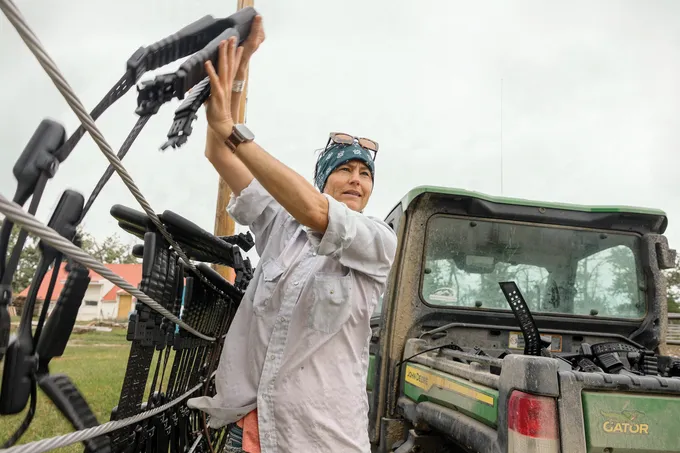
Kylie Mohr’s story opens on the McFarland White Ranch near Two Dot, Montana. The cows there wear GPS collars. When an animal gets close to a boundary drawn in a smartphone app, the collar beeps, and if the cow keeps going it gets a mild shock. Rancher Lanie White, who gave the piece its blunt title, says physical fencing is expensive and harms the land by breaking ecosystems apart.
Mohr puts the technology in historical context. Joseph Glidden patented barbed wire in 1873, and fences then spread with settlement and the Dawes Act. Today roughly 620,000 miles of barbed wire and other fencing cross the West, and that fencing injures and traps wildlife such as pronghorn. Virtual fencing goes back to buried-wire dog fences in the 1970s and USDA research in the 2000s, but it only became commercially available for range cattle in 2021.
Wildfire is pushing ranchers to adopt it fastest. Rebuilding burned fence can cost $15,000 a mile or more, while renting a collar costs about $50 a year. In Idaho, ranchers worked with University of Idaho researchers to keep cattle on unburned ground after the 2022 Moose Fire. By spring 2026 the Salmon-Challis National Forest reported 270,000 acres managed with virtual fencing.
The results have been mixed. The Whites’ first trial in 2022, with 1,800 cows, failed when hundreds of collars broke and lost their lithium batteries, and the family removed the rest of the collars early in 2023. In 2024 they tried again with solar-powered collars on 350 cows and have had fewer problems. Elsewhere, signal coverage in mountain terrain is unreliable, the software is hard to learn, and the collars can’t fix drought, invasive species or fire. One manager calls the tool a steak knife, not yet a scalpel.
Sales are still climbing fast, and several companies are now competing for ranchers. Mohr concludes that virtual fencing is here to stay and may slow the building of new fences. But no ranch she found has taken down its physical fences, and perimeter fences will probably stay. The piece ends with a pronghorn and its fawns standing behind a barbed-wire fence.