

The self-making world
The essay revisits Jean-Baptiste Lamarck (1744–1829), who coined the word “biology” in 1802. He held that living things are not passive. They continually transform themselves, and their behaviour and circumstances shape their bodies. His Philosophie zoologique (1809) set out this view. Popular memory reduces it to a cartoon about giraffes stretching their necks. Riskin follows his career at the Paris Garden of Plants and his work on invertebrates, including their capacity to regenerate.
Riskin argues that the idea of creative agency in nature was threatening to powerful men. Napoleon dismissed Lamarck, and Cuvier wrote a hostile eulogy after his death. Darwin borrowed from him while keeping his distance. Later neo-Darwinists such as Weismann and Crick removed agency from evolution altogether. Riskin links that move to eugenic thinking and to attitudes that treat nature as raw material to exploit.
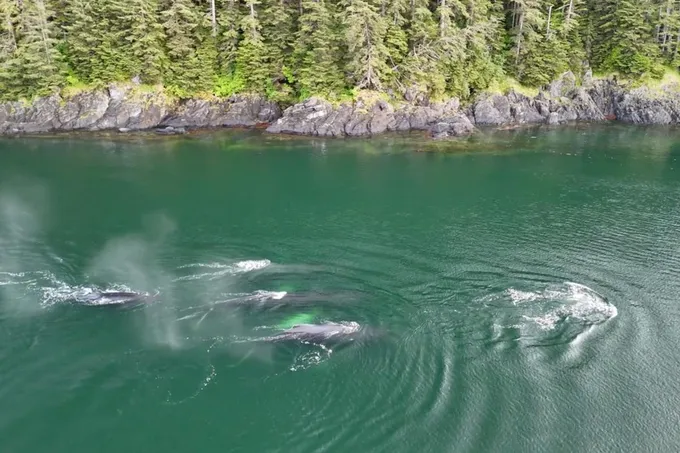
The essay then turns to recent research that gives Lamarckian themes new life. It cites heritable epigenetic changes in damselfish, coral, guinea pigs and baboons. It also covers Martha Muñoz’s work on anole lizards, niche construction, the extended evolutionary synthesis, and animal culture such as the hunting traditions of humpback whales.
Riskin concludes that organisms are active, self-making and world-making. She finds hope in this picture, because creativity and the power to transform cannot be fully controlled or monopolised.